The Rise of the Data Orchestration Engineer
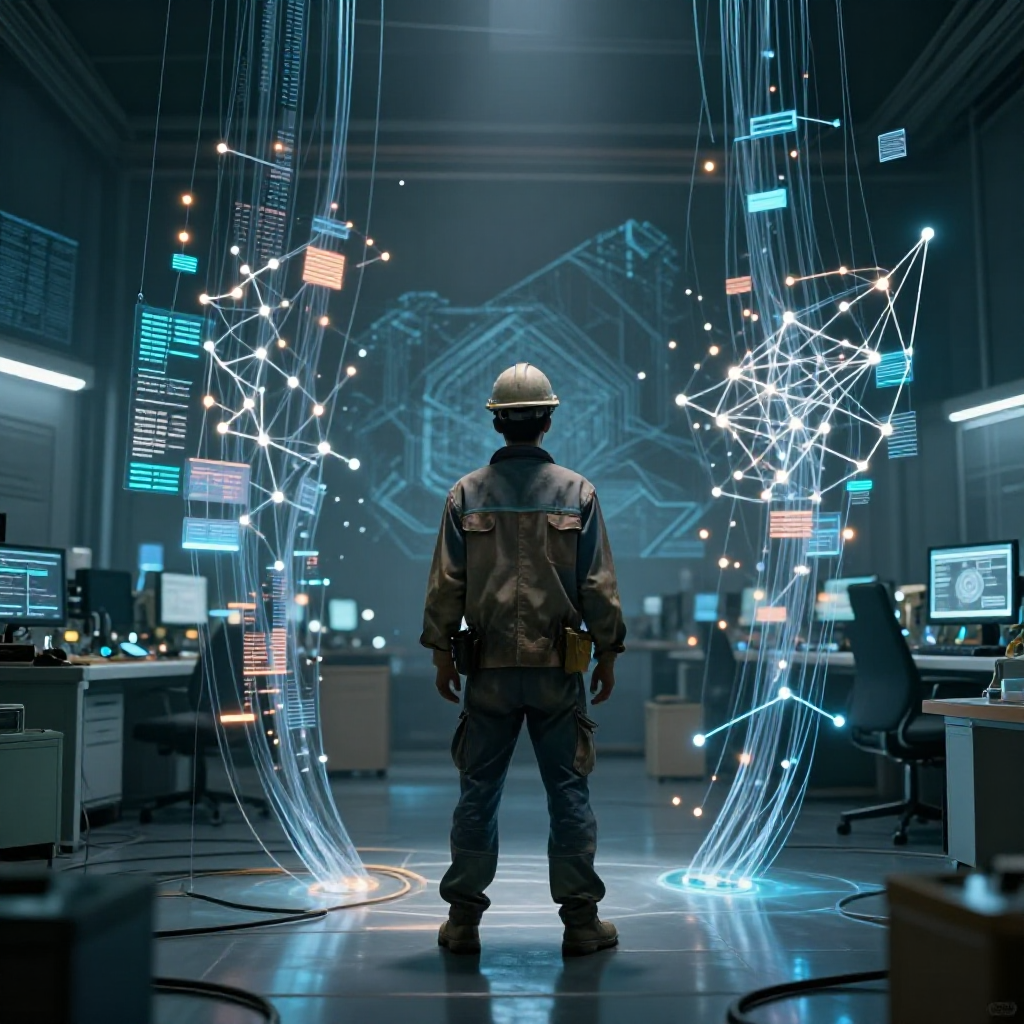
There’s a strange place you end up after enough years in this field.
You’ve seen the cycles. Centralized, decentralized, cloud, edge, buzzwords that flare up like summer storms and then quietly dissolve into the background of “just how things are done now.” You learn the tools, outlive a few of them, and carry forward the parts that actually mattered.
And then something different shows up.
AI didn’t arrive like the others. It didn’t feel like a new framework or a better database. It felt more like someone handed you a second set of hands… and then quietly stepped back to see what you’d build with them.
At first, it’s speed. You notice how fast things move. Ideas that used to take days now take minutes. Connections that lived only in your head start appearing on screen before you’ve fully articulated them. It’s easy to get caught there, chasing velocity for its own sake, burning through problems just because you suddenly can.
But after a while, something shifts.
You realize the real bottleneck was never typing speed or syntax or even access to tools. It was always the shape of the thinking. The structure behind the work. The way systems connect… or don’t.
That’s when the role starts to change.
For most of my career, the job was to build systems that store data, move data, display data. We got very good at that. We built pipelines, dashboards, alerts. We made things visible.
But visibility isn’t understanding.
And that gap has been sitting there the whole time, quietly waiting.
Now, with AI in the mix, something new is forming. Not a replacement for engineers, not even an evolution in the traditional sense, but a shift in where the real work lives.
A new kind of engineer is starting to emerge.
Not someone who just writes code, or designs infrastructure, or tunes queries.
Someone who orchestrates meaning.
A Data Orchestration Engineer.
It’s not a title you’ll find on job boards yet. It doesn’t fit neatly into the boxes we’re used to. But you can feel it taking shape if you’ve been close enough to the work.
Because the problem is no longer “how do I collect this data?”
It’s:
- how does this data relate to everything else I know?
- what context is missing?
- what is signal, and what is just noise wearing a uniform?
- what should this system understand, not just report?
We’ve spent years building systems that answer questions.
Now we’re starting to build systems that ask better ones.
And that requires a different mindset.
You’re not just wiring services together. You’re shaping flows. You’re deciding what happens to a piece of information the moment it enters the system. Where it gets enriched. Where it gets challenged. Where it gets combined with something completely different to produce something new.
Logs, metrics, provisioning data, human corrections, historical patterns… all of it becomes raw material.
The work becomes less about endpoints and more about pathways.
Less about queries and more about transformations.
Less about “what is this?” and more about “what does this mean in context?”
And this is where AI fits in, at least right now, in the real world.
Not as the thing running the show. Not even close.
But as an amplifier.
It accelerates the construction. It helps explore possibilities. It fills in gaps. It can even suggest connections you might not have seen immediately.
But it doesn’t replace the judgment.
It doesn’t know which data you trust.
It doesn’t know where the bodies are buried in your systems.
It doesn’t know the history behind why things are the way they are.
That still lives with the engineer.
Which means the role doesn’t disappear. It deepens.
If anything, the responsibility increases. Because now you can build faster than ever, which means you can also build the wrong thing faster than ever.
So the job becomes one of restraint as much as creation.
Knowing what not to automate.
Knowing what not to trust.
Knowing when the system needs a human in the loop.
There’s also something else happening, something quieter but just as important.
For the first time, many of us can actually build the systems we’ve been sketching in our heads for years. The ones that were always “too much work” or “not worth the effort” or “we don’t have the time.”
Now we do.
And that changes the game.
Because the differentiator is no longer access to tools or even raw skill. It’s the ability to bring original thinking to the table. To see connections that aren’t already documented. To design systems that weren’t copied from something that already exists.
Anyone can recreate what’s been done before with AI.
The ones who matter going forward will be the ones who build what hasn’t been done.
That’s where this new class of engineer lives.
Not at the surface, wiring together APIs and calling it done.
But deeper down, where data becomes context, context becomes understanding, and understanding starts to turn into action.
It’s early. We’re still figuring it out. Most of this doesn’t have clean definitions yet, and maybe it never will.
But you can feel the direction.
We’re not handing control over to AI.
We’re learning how to conduct something much larger than ourselves, with better instruments than we’ve ever had.
And the engineers who learn how to do that well… they’re going to shape whatever comes next.
--Bryan (AI Assisted)